Translated from Portuguese by Claude. Leia o original em português · more in English
Byung-Chul Han, Hyperstimuli and Self-Programming
I have been very struck by the social acceleration of time and by this mechanism of the achievement society, the burnout society, of Byung-Chul Han. This phenomenon obviously shows up in the corporate world, where we sink into metrics, OKRs and repetitive processes. But it swallows our personal life: it is in your Apple Watch. In your Garmin, in your digital scale, in your habit tracker. In Duolingo.
We used to measure hours, minutes, seconds, and now we measure milliseconds, heartbeats, oxygen saturation, stress level, what time we go to sleep, what time we wake up. I myself, in this same direction, have been writing down everything I eat for 600 days, whether I exercised or not, whether I ate well, fasted and so on.
There is this feeling that we never have time, when the truth is that we fill our time with stimuli. There are hyperstimuli everywhere, including the one from vibe coding, which causes brain fry. We can no longer accept the time of boredom, even though everything indicates it is essential for ideas to settle and come together.
It is a very complex mechanism of performance control. I believe part of it comes from this “mechanical”, automaton-like mind of ours, from computing. It comes from my having programmed a lot and wanting to live with predictability of the next events, with if/else chains… and let’s hope the script doesn’t fall into an unforeseen corner case!
I often “program myself”, thinking through all possible cases and paths of the tree of possibilities. But the cyclomatic complexity of the corporate world is intangible, and of personal life even more so. Those who write programs, who build software, are being trained in overthinking from early on… and it ends up spilling over into the way we live.
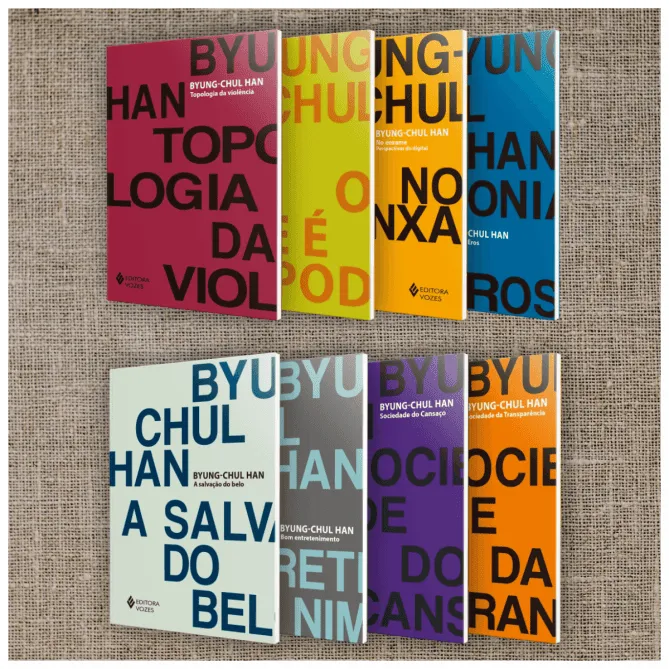
This connects to what Byung-Chul Han brings in that bunch of important little books, which I have already discussed on Hipsters 444 (my podcast, in Portuguese): the lack of rituals, the lack of silence, the tireless pursuit of performance in every aspect. It leaves us trying to be productive, consuming, “doing” something all the time. As if we were machines.
It is curious that I thought of writing this post because of a simple fact: these days, approaching 50, I have a little pill organizer, the kind with the 7 days of the week. It is interesting to feel the dizzying frequency with which I have to stop to refill each of the little compartments.
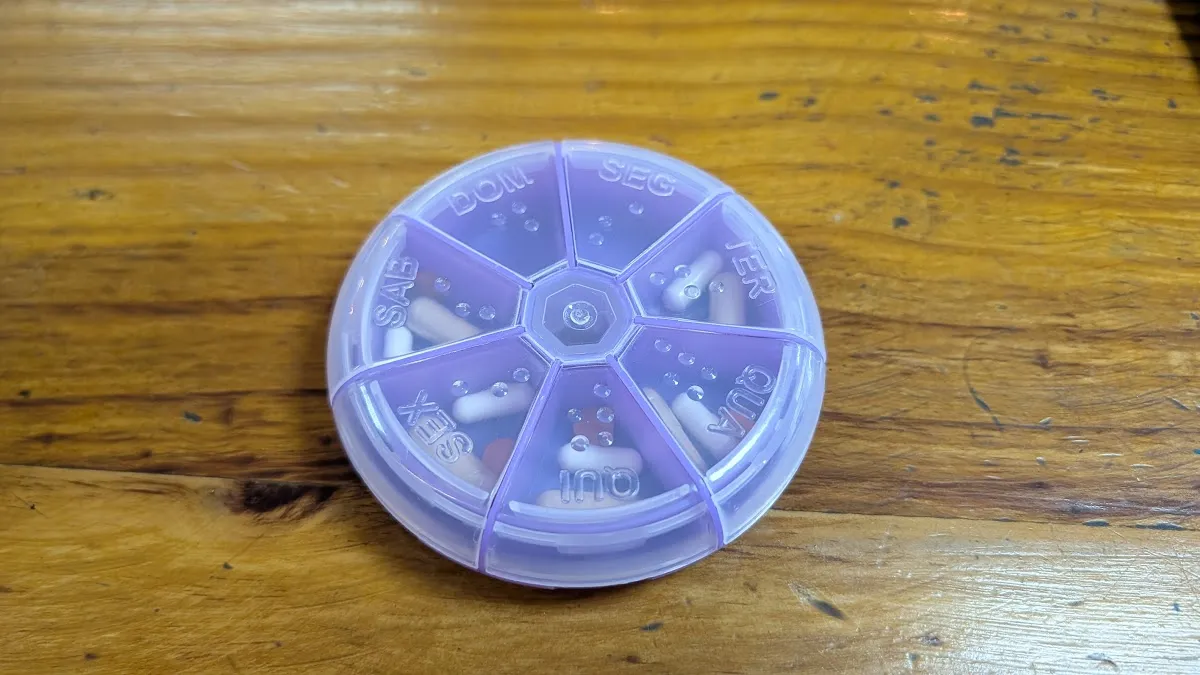
Life and biology don’t respect the 7-day sprint of these little boxes.
A decade ago the poster showing how many weeks of life we have went viral. To try to make you aware of the speed of time and of life.
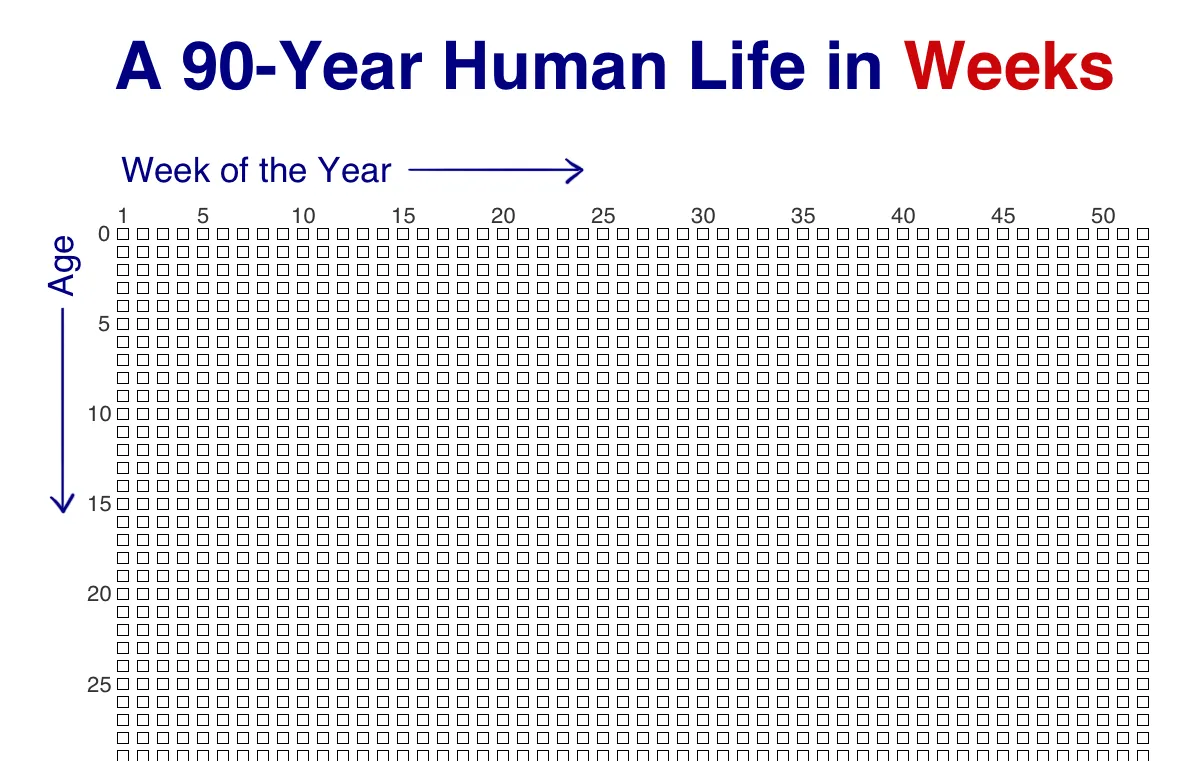
If we look at life as a division into weeks, we fall into the problem of atomization. It doesn’t improve our situation. It ends up pushing us to self-program our life in little blocks. Make no mistake: each little square there is putting a personal sprint on you.
At the same time that I have this atomized programming of small intervals and data about everything, I feel this clear need for long-term thinking, over decades or even centuries. And there are projects, people and philosophers calling for attention to these symptoms.
While we create projects with monthly OKRs and weekly sprints, swallowing a pill a day, some projects are born long-term. The Clock of the Long Now is a clock being built inside a mountain in Texas to last 10,000 years. And it has no launch date. A colossal project, entirely mechanical, synchronized with the sun, made to remind us that we also need to think about long cycles.
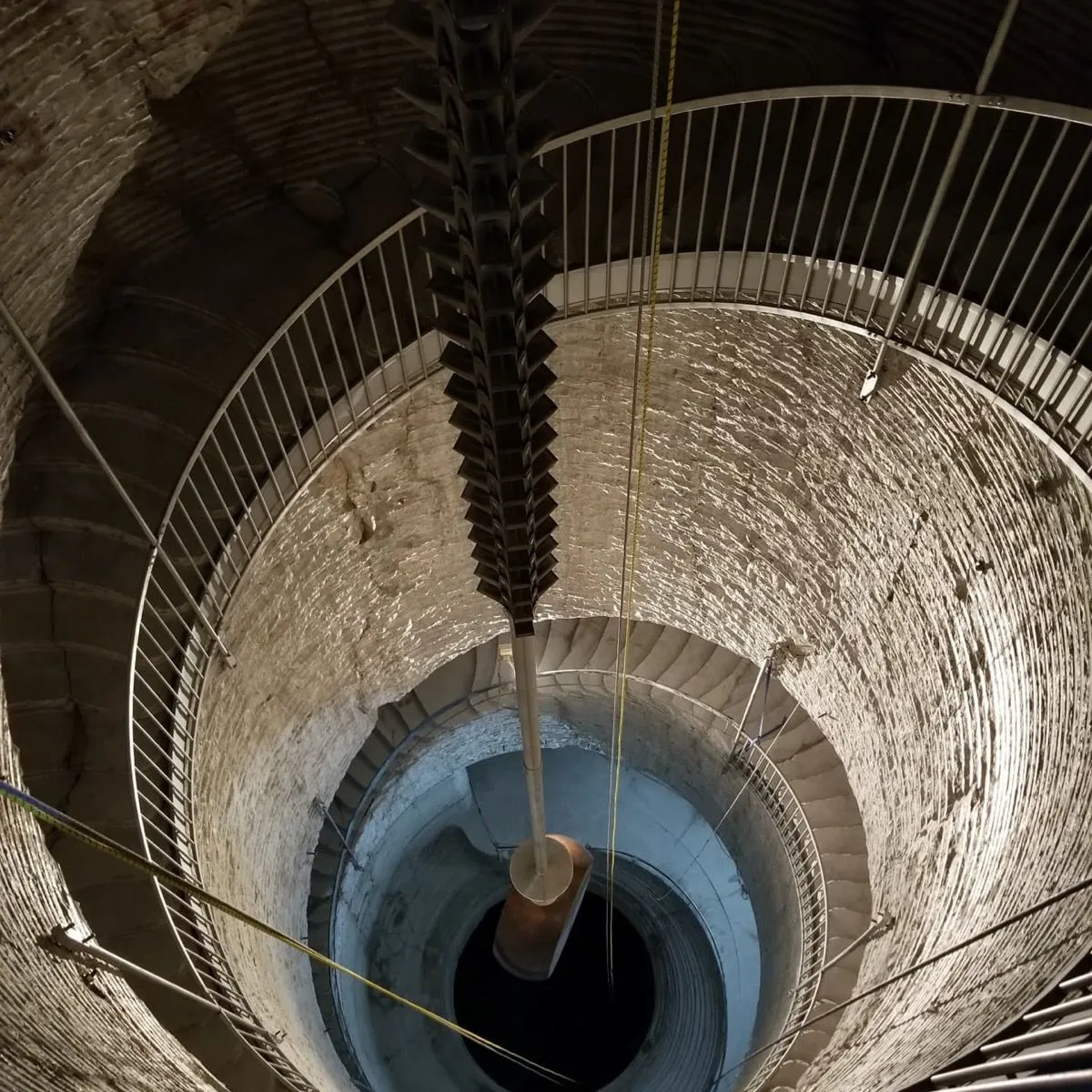
Curiously, the project is funded by big tech founders who are part of all this acceleration. It’s not easy.
I learned about the Long Now at a talk in São Paulo by Roman Krznaric, the author of The Good Ancestor, where he argues for the need to think over a horizon of at least 250 years. 250 years covers life from the birth of your grandparents to the end of your grandchildren’s lives. It is a window that deserves attention.
Cortázar already knew. In the Preamble to the Instructions on How to Wind a Watch, which I recited on my 2021 year-end podcast (in Portuguese): they aren’t giving you a watch, you are the gift, they’re giving you yourself for the watch’s birthday (Paul Blackburn’s translation). If we surrender to the Apple Watch, we end up being self-programmed by it. We need to master technology so as not to be mastered by it.
The discussion (5 comments, in Portuguese) is on the original post.
More in English
- Archetypes instead of professions note · Sep 28, 2026
- AGI, exponentiality and superintelligence note · Sep 25, 2026
- Human Out of the Loop, Asimov and Gradual Disempowerment post · Sep 24, 2026
- My personal knowledge system after six months note · Sep 23, 2026
- Fred Brooks, Fowler and what doesn't change in the profession note · Sep 16, 2026