Translated from Portuguese by Claude. Leia o original em português · more in English
Feeds, Brain Fry and Vibe Coding
In the tech world, each of us usually has our own addiction to some screen mechanism, news feed or social network. We choose to be constantly bombarded with stimuli. This is nothing new, and the criticism is well known, even tiresome.
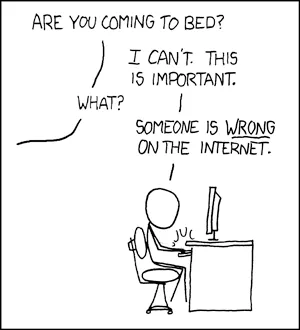
My particular case was Instagram, but it has also been Twitter (I recently came back) and for some, I understand, it is LinkedIn. Feed algorithms are always looking for a way to keep us hooked, be it through cute cats, violence, anger, envy, dismay, or the famous feeling that we need to correct someone else’s opinion.
Once I started using Instagram only on the web, where the UX is not as addictive as on the smartphone, especially because doom scrolling doesn’t happen the same way, after about 20 days my head started to get more orderly.
The problem is not necessarily social media or screens. My generation grew up on screens, video games, television and programming computers, and that didn’t generate these anxiety problems like today. The volume of information, new content to explore and stimuli is certainly the worst part.
I reached the point of searching for meditation on Instagram. And, when I wanted to leave, everybody has the line “but there is good stuff on this or that social network too”. It’s true, and that is what makes the addiction hard to quit.
Brain Rot and Brain Fry
Social media, Reels and Vibe Coding have something in common. Some of them produce our experience of Brain Rot, and others, which in theory bring positive results, can lead to the new Brain Fry. The reward mechanism is accelerated, making us go for one more terminal, one more prompt.
On one side, scrolling a feed of Reels that knows exactly what to show you. On the other, something that looks productive, like using AI to create software. Both generate such a short cycle of winning that the feeling between Rot and Fry is similar.
I’m not advocating that vibe coding should be avoided. It’s better to be in Codex, Claude, Copilot and the like than scrolling videos that confuse and fragment interests.
Yearning vs Craving
Tao Bojlén’s article talks about this: the difference between yearning and craving.
In an ideal world, my work would be driven by yearning — a deep longing to create something useful, beautiful, and right. But, increasingly, the dominant drive seems to be craving — a craving for the next bug fixed, the next problem solved, the next small dopamine hit of a subtask completed. […] Craving is immediate, targeted towards some discrete unit, and can never really be fulfilled.
In my case, yearning is useful software, with a long time horizon. But what usually dominates me is craving, with subtasks, some of them kind of useless, right? And never truly satisfied.
I have always found coding addictive. But agentic engineering is making the dopamine so readily available that it’s dangerously exhilarating. […] The fast prompt-response cycle with an eager helper catering to your every whim is the root of the problem.
Programming has always been addictive, especially when we get into the so-called flow. We need intention in vibe coding, we need to think and write before acting.
We need to keep the “vibing” on the positive side. Instead of creating thousands of bad PRs or subsystems almost nobody will use. It’s a note to myself :).
Social media as cigarettes
In the near future, in just one generation, our sons and daughters will say: “my father used social media at any time, anywhere”. The same way we say today: “our parents smoked three cartons of cigarettes a day”.
I wouldn’t say screens are at the same level, but maybe some algorithmic mechanisms are, and there are already governments and think tanks making plans. From banning cell phones in schools to initiatives that involve banning, rightly, social media for some age groups.
The World Happiness Report 2026 has a whole chapter with Jonathan Haidt arguing that social media is harming adolescents at a scale large enough to cause population-level changes.
Nobody is going back to how it was in the 90s, but something needs to happen.
The discussion (3 comments, in Portuguese) is on the original post.
More in English
- Archetypes instead of professions note · Sep 28, 2026
- AGI, exponentiality and superintelligence note · Sep 25, 2026
- Human Out of the Loop, Asimov and Gradual Disempowerment post · Sep 24, 2026
- My personal knowledge system after six months note · Sep 23, 2026
- Fred Brooks, Fowler and what doesn't change in the profession note · Sep 16, 2026