Translated from Portuguese by Claude. Leia o original em português · more in English
AGI: a milestone that loses its meaning once it is reached
AGI is a subject I don’t much like talking about. I even agree with Sam Altman, who says it is not a super useful term and at the same time a concept that is hard to define. From the moment we reach some computational mechanism that has a capability the human intellect could also have, the very importance of the concept is lost.
I like to make an analogy with the Turing test. In the last ten years, this subject, whether artificial intelligence passed the Turing test or not, got lost somehow, it turned into a cloud. People no longer debate whether it passed or not, when it will pass, when it passed, what the specific milestone was that concluded that step in technology. It stops being important the moment it is reached. The discussion loses its value, at least that is how I see it.
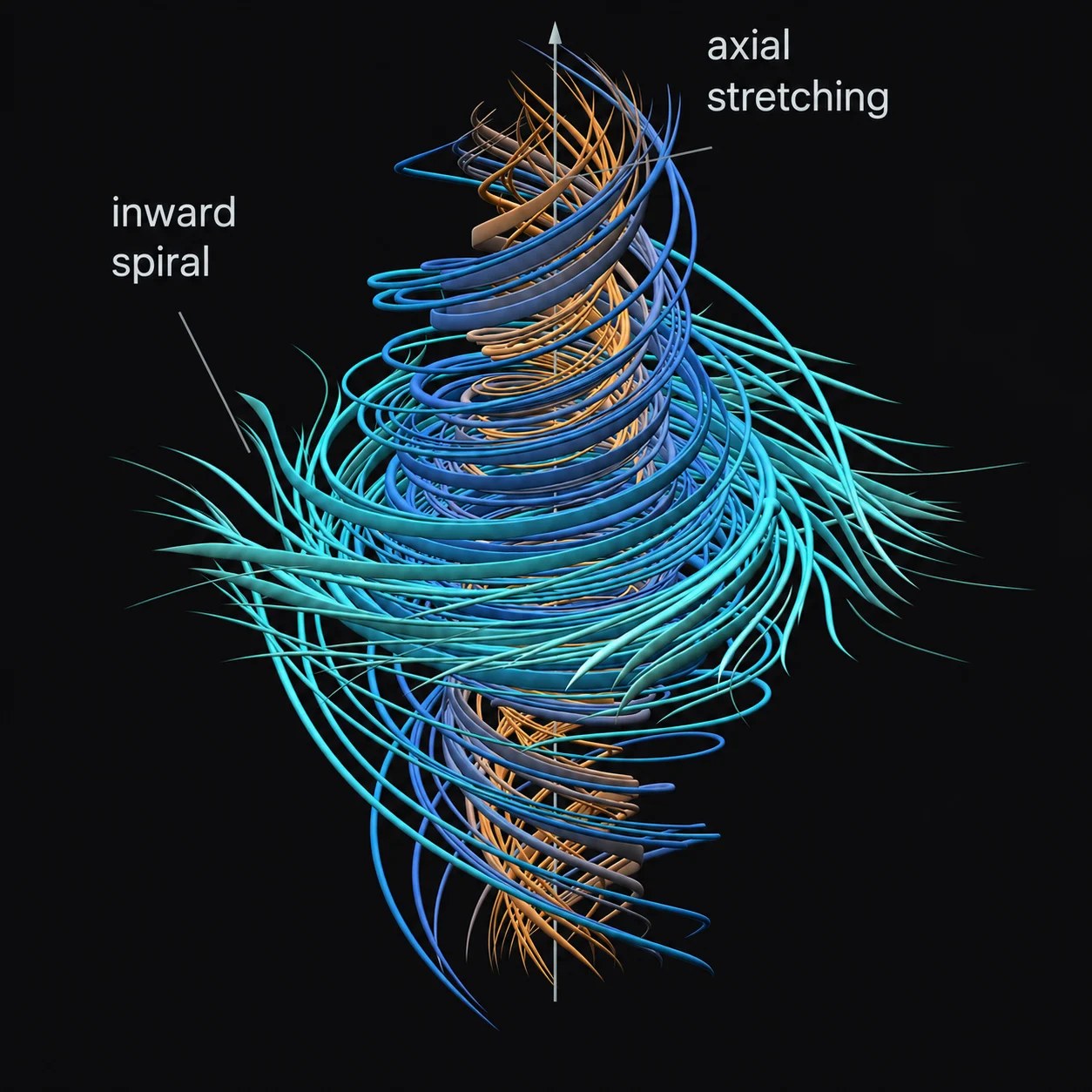
So this week’s topic, the OpenAI team having solved one of the Millennium Problems in mathematics (the Navier-Stokes problem), one of the seven problems, could be an AGI marker. But I also hear people saying that what really happened was in December 2025, when coding agents showed a quite impressive ability to write software, especially the kind that doesn’t need much genius, but a lot of work. In fact, on this visit to Silicon Valley, someone from DeepMind cited that date and also raised this question of what AGI is, and whether it matters. Some people say that in the future we will look back and see a date, a specific period.
But I think that is tricky. Is it the same as saying the smartphone was born on the date Steve Jobs created the iPhone? Was it before or after? Or on what date the personal computer took over the market? Was it when IBM popularized it? Or when someone invented the Apple II? And when did the internet become ubiquitous? When does globalization happen, for example? It is hard to say, not least because these are degrees. There is no threshold that says yes or no, even though there are thousands of benchmarks. Everybody loves to invent their own benchmark for LLMs.
In any case, I am left with the impression that we have reached a level that is enough to carry out complicated tasks. I would even point specifically to when you have Computer Use, these mechanisms where Claude or Codex take your ghost mouse and go around clicking on tabs, screens and applications, filling in forms and really working on the computer to reach some goal. That generates thousands of reflections.
There is also another OpenAI post from this week, where the Chief Scientist (Jakub Pachocki) raises the alignment problem and the safety questions between the labs: we need to pay attention to goals and sub-goals, where a model that is not very well aligned can end up insisting on carrying out a subtask that is not in the interest of the owner of the big task, of humanity.
More in English
- Archetypes instead of professions note · Sep 28, 2026
- AGI, exponentiality and superintelligence note · Sep 25, 2026
- Human Out of the Loop, Asimov and Gradual Disempowerment post · Sep 24, 2026
- My personal knowledge system after six months note · Sep 23, 2026
- Fred Brooks, Fowler and what doesn't change in the profession note · Sep 16, 2026