Translated from Portuguese by Claude. Leia o original em português · more in English
Walled gardens, Tim Berners-Lee and OpenClaw
I am from the time when the web flourished in blogs, RSS feeds, small phpBB forums. GUJ, the Brazilian Java forum whose old pages are here in my museum (in Portuguese), is from that time.
Each person, each small group, had their “site” in the broad sense of the word. I had my group of devs, the page of my Age of Empires clan, a list of friends doing their master’s and their research. And everything was accessed by small groups with common interests.
Over time everything was captured by walled gardens: beautiful gardens of content, but hidden behind walls of login and password (Facebook, Twitter, Instagram). This dynamic largely killed the flourishing of new discussion spaces and pasteurized communication formats. There is not much to deny.
LLMs, especially agents, can help reverse this dynamic a bit: content discovery no longer depends on a feed controlled by an algorithm, on a closed platform. Agents browse almost freely, looking for text, opinions and skills wherever they are. More: they pressure the walled gardens to open up a little.
That is what I thought when the news came out about Instagram opening up to crawlers like Google’s: whoever stays walled in won’t get visits from agents or from LLMs for training.
Tim Berners-Lee has been proposing this new infrastructure (Solid, data wallets, etc), including openly advocating the end of walled gardens in social networks. Bluesky is also an example, with the AT Protocol.
We don’t need to wait for this pile of specifications to be adopted. Today we can already build tools so that agents can use existing APIs, or simple crawlers, to read, and also write, on whatever network, with whatever system and UX.
It is interesting to see Anthropic, which prompted the creation of the MCP standard, positioning itself more emphatically in favor of Markdown and Skills. There is even the article by the creator of Pi explaining why he prefers this skills approach.
In the long run, agents doing open discovery may make the question “which social network are you on?” irrelevant.
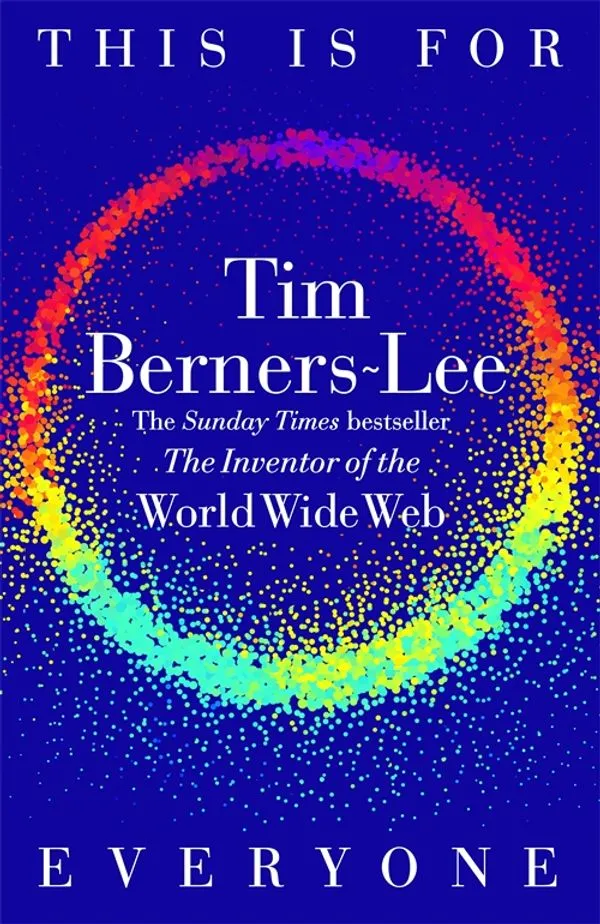
This is actually a theme that the father of the Web, Tim, talks about in his latest book. And we are going to translate this book into Portuguese through Casa do Código and Seiva. And I would really love to narrate the audiobook.
More: I will create a small system (disposable software, I will talk about it soon) to do this: so that I can write in one place and propagate to X, Instagram, LinkedIn, Bluesky, etc… and at the same time receive the replies in a single place, in my OpenClaw, in my Pi, it doesn’t matter… that will do more than trivial social listening, it will do web listening.
LLMs and agents can make the gardens outside the walls flourish again :). I want to get my hands dirty with the AT protocol and this Personal Data Server mechanism, White Wind and other projects trying to create a space like this.
In fact, if you reply to me on X, on Bluesky, or another network where I cite this post (or if you cite it), I will get a notification. That notification lets me make your comment show up down below. (By the way, we already had a first example and it worked very well). This way I decouple the conversation from the walled gardens and the social networks.
I created this project with vibe coding and soon I want to talk more about disposable software, the perishable, ephemeral software that we end up generating this way. And I asked the agent to write about this work.
The discussion (13 comments, in Portuguese) is on the original post.
More in English
- Archetypes instead of professions note · Sep 28, 2026
- AGI, exponentiality and superintelligence note · Sep 25, 2026
- Human Out of the Loop, Asimov and Gradual Disempowerment post · Sep 24, 2026
- My personal knowledge system after six months note · Sep 23, 2026
- Fred Brooks, Fowler and what doesn't change in the profession note · Sep 16, 2026