Translated from Portuguese by Claude. Leia o original em português · more in English
Vibecoding, Hipsters and the New Dev
Peter Steinberger, creator of OpenClaw, says vibecoding is what he does late at night and regrets the next day. He says he does agentic engineering to build software. On the podcast with Lex Fridman he says you need to focus on the ability to solve problems and build products [citation needed].
“don’t see yourself as an iOS engineer anymore.” Like, “You need to change your mindset. You’re a builder.” And you can take a lot of the knowledge how to build software into new domains
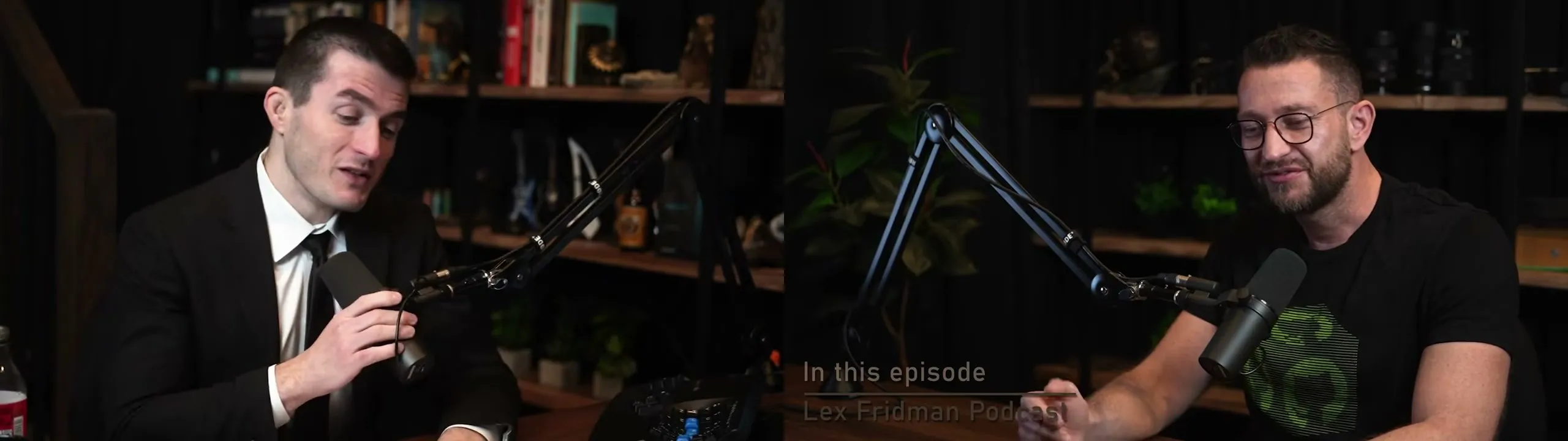
Vibecoder, Builder, New Dev. I don’t know exactly what our profession will be called, but the direction has become clearer.
In 2016 I came across a post titled “You Are Not Paid to Write Code”. Yes: for a long time we have been criticizing metrics of lines of code produced. With the intrinsic value of each line of code falling even further, it is time to understand that our profession really has another goal.
And the goal is to orchestrate all this building. Which is not easy at all, as Fred Brooks put it about 40 years ago in The Mythical Man-Month:
The hardest single part of building a software system is deciding precisely what to build.
André Fatala sent me this talk from AWS re:Invent 2025, where AWS CTO Werner Vogels makes important analogies. The “Drag and drop is still code”. I would say “Vibe coding is still programming”. And the focus on the T-shaped developer (T-Shaped Developer).
“T-shaped developers combine depth with breadth. They can dive deep into specific problems, but will also understand how it fits into a larger system.”
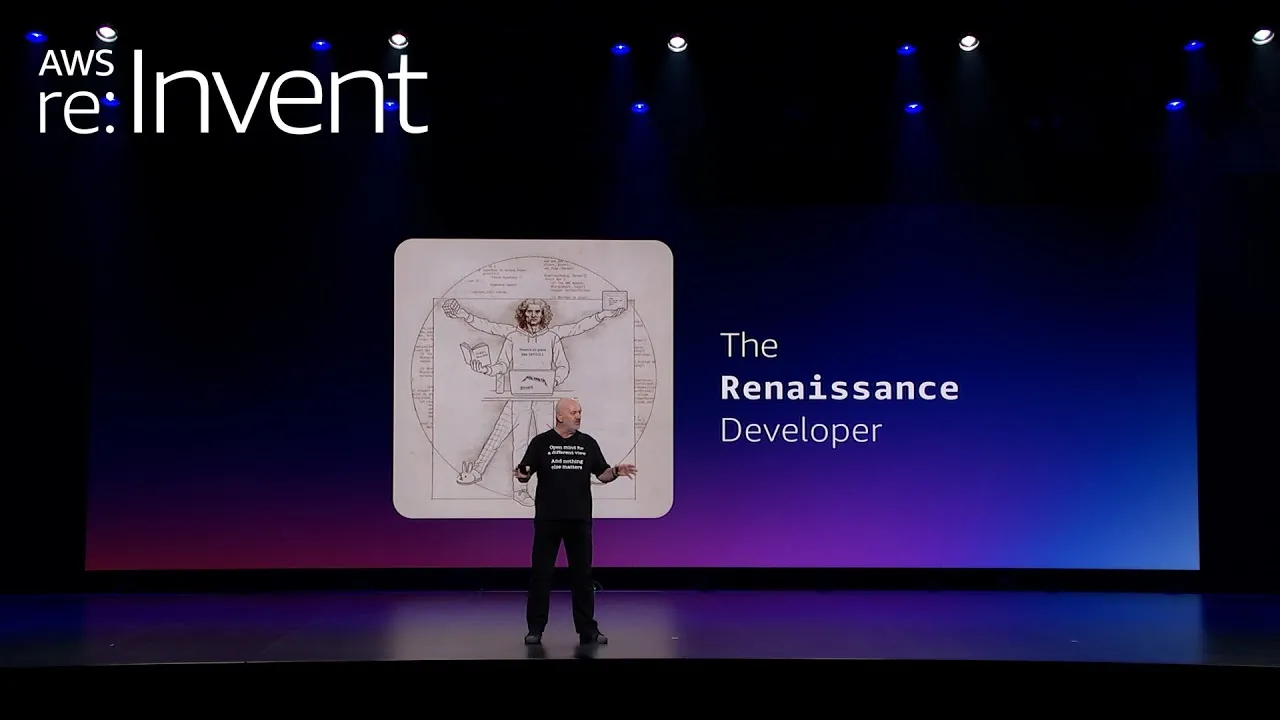
He talks about curiosity: the nerd spirit of taking things apart and trying to understand how they work underneath. About systems thinking: having a broad view of the system, understanding how things connect. Plus the need for the professional to understand communication, ownership and even to be a polymath, expanding knowledge across several areas.
And this is a recurring theme in my discussions: the demand for flexibility and adaptability. How many times have you heard from your boss “you’re doing well, but you need to adapt and learn a new skill”. It shows up both in the modern corporate world and in the startup space.
Since 2016 I have been hammering on the T-shaped professional. It is common jargon for people in the HR world. The concept appeared a long time ago, back in the last century: depth in one discipline, with enough knowledge for collaboration in other areas. At Alura (the online tech school I founded) we use the term Dev em T (“T-shaped dev”, in Portuguese) as a marketing device, but it truly represents what I believe. The episode Hipsters #322 (my podcast, in Portuguese) covers a lot of the subject.
With LLMs, being a T-shaped dev becomes an essential virtue: it will be hard to fit into a team with only hyper-specific knowledge of an API or platform, without technically understanding the domain as a whole.
Bill Gates already anticipated this. When he read the book Range: Why Generalists Triumph in a Specialized World, he wrote (I had already commented on this connection at Alura, in Portuguese):

“I believe that one of the key reasons Microsoft took off is because we thought more broadly than other startups of that era. We hired not just brilliant coders but people who had real breadth within their field and across domains.”
More recently, Martin Fowler published an article about Expert Generalists, where he argues that being a generalist is, in itself, a sophisticated expertise. And that this skill became even more valuable with the arrival of LLMs. I read this article on Hipsters #510 (in Portuguese).
The T-shaped professional has obvious challenges, especially early in the career: even before LLMs we saw tech professionals jumping from platform to platform, from front to back, from UX to PM, without enough time to gain real specialization. The T-shaped professional does need time of focused experience in one technology before gaining breadth.
I am back as the host of Hipsters Ponto Tech. More than 500 episodes that shaped me as a professional. I define myself as a teacher, programmer (I went back to programming!) and podcaster. When you have a mix of professions, it is always harder to gain depth, but there is a greater breadth of capabilities.
The new dev, the new generation of devs, will face this. Because you need to understand a bit more of your company’s business domain, now that simple lines of code and small tasks are completely automated or generated. The new dev needs to accept that the borders between tech and business professions are shrinking.
Vibecoding and agentic engineering are consolidating as reality for the New Dev. You need to get involved with these hipster mechanisms that make other forms of abstraction possible when we program machines. Don’t be afraid of these changes: exercise your curiosity.
The discussion (10 comments, in Portuguese) is on the original post.
More in English
- Archetypes instead of professions note · Sep 28, 2026
- AGI, exponentiality and superintelligence note · Sep 25, 2026
- Human Out of the Loop, Asimov and Gradual Disempowerment post · Sep 24, 2026
- My personal knowledge system after six months note · Sep 23, 2026
- Fred Brooks, Fowler and what doesn't change in the profession note · Sep 16, 2026